Honest sourcing note: Coconut shisha charcoal is a natural product, so ash, fixed carbon, moisture and volatile matter are stated as tier bands — super-premium typically 1.6–2.0% ash and ≥80% fixed carbon — not zero-variance figures. Final specs are confirmed per purchase order and SGS pre-shipment lab analysis. FOB and CFR figures are indicative ranges last verified June 2026 and move with shell cost, kiln fuel, labor and freight; final pricing is by quote, never posted as fixed. MOQ is one full container (20ft or 40ft HQ); we ship FCL only. We are an independent Indonesian export desk — not a single plantation or factory — aggregating vetted producers in Sulawesi, North Maluku and Java. Import duties and rules are your responsibility; this is general information, not legal advice.
Coconut charcoal production in Indonesia is a multi-stage process transforming discarded coconut shells into high-quality, consistent shisha charcoal briquettes, optimized for clean burn and sustained heat. This detailed overview explains how this essential commodity is made, focusing on the technical specifications and verifiable quality signals critical for B2B importers.
## The Foundation: Sourcing Raw Materials in Indonesia
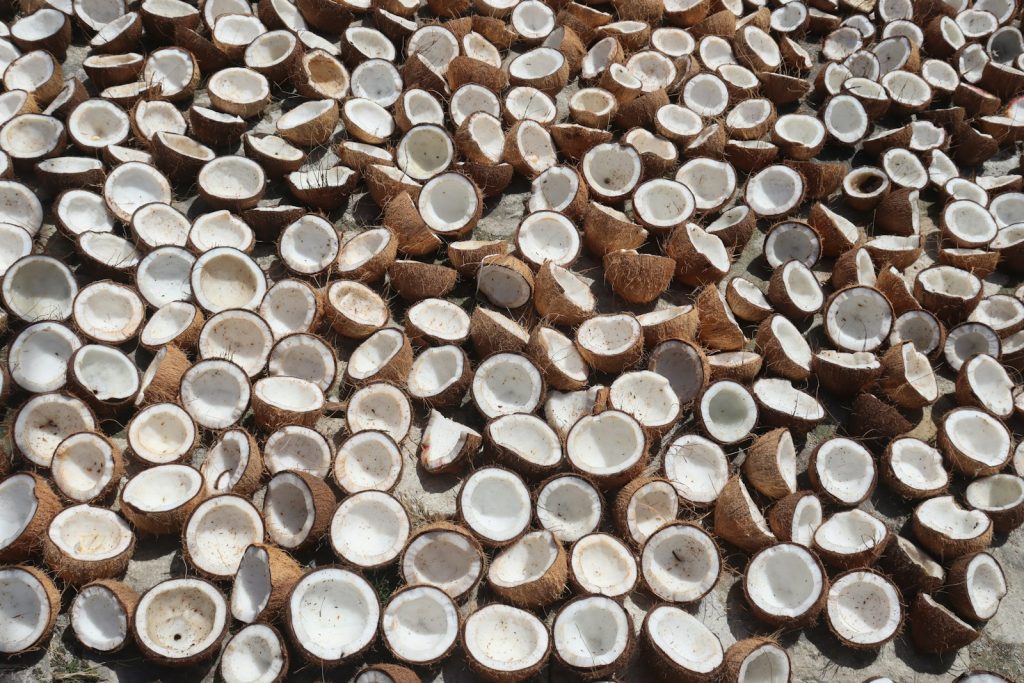
The journey of Indonesian coconut charcoal begins with the raw material: mature coconut shells. Indonesia, as a leading global coconut producer, provides an abundant and sustainable supply. Key sourcing hubs include Sulawesi and North Maluku, where coconuts are harvested primarily for their meat and water, leaving the hard shells as a plentiful byproduct.
These shells are collected from local farms and processing centers. The quality of the raw shells directly influences the final charcoal product. Shells must be mature, clean, and free from excessive dirt or fibrous remnants. Immature shells or those with significant organic contamination can result in lower fixed carbon percentages and higher ash content in the final charcoal. Our network ensures shells are sourced from established collection points, minimizing impurities from the outset.
### Why Raw Material Quality Matters for Buyers:
* **Fixed Carbon (FC) Potential:** Mature, clean shells have a higher inherent carbon content, allowing for better carbonization and thus higher fixed carbon in the final briquette.
* **Ash Content:** Contaminants like dirt or coir fibers increase the inorganic matter, directly contributing to higher ash content. Lower ash means a cleaner burn and less residue on the shisha foil.
* **Sustainability:** Utilizing a byproduct of the coconut industry ensures the production process is environmentally responsible and does not contribute to deforestation.
## Carbonization: The Core Transformation
Carbonization is the thermal decomposition of organic material (coconut shells) in a limited oxygen environment, converting them into charcoal. This is the most critical stage, directly determining the fixed carbon content, volatile matter, and overall quality of the resulting raw charcoal.
In Indonesia, two primary types of kilns are employed for this process:
1. **Vertical Kilns:** These are typically steel drums or brick structures where shells are loaded from the top and heated. The process is semi-continuous, and heat management can be more uniform.
2. **Horizontal Kilns:** Often simpler, larger brick structures, horizontal kilns allow for larger batch processing. Heat distribution can sometimes be less uniform than in vertical kilns, requiring skilled operators to manage the burn.
Regardless of kiln type, the temperature range for effective carbonization is generally between **400°C and 600°C**. Maintaining this range is paramount:
* **Below 400°C:** Insufficient carbonization, resulting in high volatile matter, lower fixed carbon, and charcoal that is difficult to ignite and burns inconsistently.
* **Above 600°C (and prolonged exposure):** While potentially increasing fixed carbon, excessively high temperatures can lead to the degradation of the charcoal structure, making it brittle and prone to pulverization during subsequent processing. It can also consume more of the carbon itself, reducing yield.
The carbonization process typically takes 8-24 hours, depending on the kiln type, batch size, and desired charcoal properties. After the burn, the raw charcoal is allowed to cool completely, often for another 24-48 hours, to prevent auto-ignition during handling.
### How Carbonization Temperature Impacts Fixed Carbon Percentage:
Fixed Carbon (FC) is the primary indicator of a charcoal’s energy content and burn duration. Higher FC means more sustained heat and less ash.
* **Lower Carbonization Temperatures (e.g., 400°C):** Yields charcoal with lower FC (e.g., 70-75%) and higher Volatile Matter (VM). This charcoal ignites more easily but burns faster and produces more smoke.
* **Higher Carbonization Temperatures (e.g., 500-600°C):** Produces charcoal with higher FC (e.g., 78-85% or even 90% for super-premium) and lower VM. This charcoal requires more heat to ignite but offers a longer, more consistent burn with minimal smoke.
For shisha charcoal, the objective is generally high fixed carbon and low volatile matter to ensure a clean, long-lasting, and odorless burn. This necessitates precise control over the carbonization temperature.
## Processing Raw Charcoal: From Lump to Powder
Once the raw coconut shell charcoal is cooled, it undergoes several processing steps to prepare it for briquetting. This stage is crucial for achieving consistent briquette density and burn characteristics.
1. **Crushing:** Large lumps of raw charcoal are fed into crushers, which break them down into smaller, more manageable pieces. This initial crushing facilitates easier handling and subsequent grinding.
2. **Grinding (Pulverization):** The crushed charcoal is then further processed in specialized grinding machines, typically hammer mills or ball mills. The goal is to reduce the charcoal to a fine powder (mesh size 80-120, depending on the briquette type and desired density). A consistent particle size distribution is vital for achieving uniform mixing with the binder and producing strong, dense briquettes. Inconsistent grinding can lead to weak briquettes that crumble easily or burn unevenly.
3. **Sieving:** The charcoal powder is then sieved to remove any oversized particles or impurities that may have been missed during earlier stages. This ensures a uniform powder consistency, which is critical for consistent briquette formation and performance.
### Indication of Quality from Grinding:
A finely ground and consistently sized charcoal powder indicates a professional production line. Coarse or uneven powder can lead to:
* **Weak Briquettes:** Poor binder distribution and reduced inter-particle bonding.
* **Inconsistent Burn:** Areas of different density within the briquette.
* **Higher Ash Content:** If coarser particles are un-carbonized shell fragments.
## Binding and Forming: Crafting the Briquettes
With the charcoal powder prepared, the next step is to mix it with a binder and form it into the desired briquette shapes. This stage is fundamental to the structural integrity and burning performance of shisha charcoal.
1. **Mixing:** The finely ground charcoal powder is transferred to large industrial mixers. Here, a specific percentage of food-grade binder is added and thoroughly combined. For high-quality shisha charcoal, the industry standard and our practice is to use **cassava starch**. Cassava starch is derived from the cassava root, a natural and renewable resource widely cultivated in Indonesia. It is food-grade, odorless, tasteless, and burns cleanly without imparting any chemical odor or taste to the shisha smoke.
* **Binder Percentage:** Typically ranges from 2.0% to 3.5% of the total briquette weight, depending on the desired hardness, shape, and fixed carbon target. Too little binder results in fragile briquettes; too much can increase ash content and potentially affect burn quality.
* **Water Addition:** Water is gradually added during mixing to create a consistent, pliable paste. The moisture content of this paste is carefully controlled to ensure optimal extrusion or pressing.
2. **Extrusion or Pressing:** The charcoal paste is then fed into briquetting machines.
* **Extruders:** For shapes like fingers, flats, or smaller cubes, extruders force the paste through dies under high pressure. This creates continuous logs of charcoal that are then cut to precise lengths.
* **Hydraulic Presses:** For larger cubes (e.g., 25x25x25mm, 26x26x26mm) and custom shapes, hydraulic presses compact the paste into molds. This method often results in denser, harder briquettes.
Common shisha charcoal shapes include:
* Cubes (e.g., 22mm, 25mm, 26mm)
* Flats (e.g., 25x25x15mm)
* Fingers (e.g., 18x35mm)
* Hexagonal/Circular (e.g., 40mm diameter)
### Why Cassava Starch Binder is Critical for Hookah Use:
The choice of binder is a key differentiator for shisha charcoal.
* **Food-Grade Purity:** Cassava starch is a natural, non-toxic, and food-grade binder. This is essential for shisha charcoal, as it means the binder will burn cleanly without releasing harmful chemical fumes or unpleasant odors that could taint the shisha experience.
* **No Petrochemical Binders:** Cheaper, non-food-grade binders (e.g., certain industrial starches, chemical adhesives) can contain petrochemicals or other impurities. When burned, these can produce acrid odors, unpleasant tastes, and potentially harmful byproducts, making the charcoal unsuitable for shisha.
* **Ash Content Impact:** While any binder adds to ash, cassava starch typically contributes minimally and cleanly compared to less refined alternatives.
**What to Ask a Producer:**
* “What type of binder do you use, and what is its specific percentage in the briquette?”
* “Can you provide a specification sheet for your binder?”
## Drying and Curing: Ensuring Structural Integrity and Burn Quality
After forming, the briquettes contain significant moisture from the mixing process. This moisture must be removed to achieve proper hardness, prevent mold growth, and ensure optimal burn performance.
1. **Initial Air Drying:** Freshly formed briquettes are typically laid out on trays or racks in well-ventilated areas for an initial period of air drying. This allows surface moisture to evaporate naturally, preventing sticking and maintaining shape.
2. **Kiln Drying:** For consistent and accelerated drying, briquettes are moved into controlled drying kilns. These kilns use heated air (often indirectly to avoid smoke contamination) to reduce the moisture content to the target level.
* **Temperature Control:** Drying temperatures are carefully monitored, typically ranging from 70°C to 100°C. Too high a temperature too quickly can cause cracking or structural damage to the briquettes.
* **Humidity Control:** Maintaining appropriate airflow and humidity is also important to prevent uneven drying.
3. **Moisture Content Target:** The goal is to reduce the moisture content (MC) of the finished briquettes to below **8%**. For super-premium grades, targets can be even lower, often 4-6%.
* **Impact of High Moisture:** Briquettes with high moisture content are heavy, burn poorly, are difficult to ignite, may crack during burning, and can promote mold growth during storage and shipping. High moisture also means buyers pay for water, not charcoal.
* **Curing:** The drying process also acts as a curing stage, allowing the binder to fully set and bond the charcoal particles, contributing to the briquette’s overall hardness and structural integrity.
## Quality Control: The Non-Negotiable Step
Rigorous quality control (QC) is implemented at multiple stages of the production process, not just at the end. This ensures consistency and adherence to specified parameters. For B2B buyers, understanding these QC checkpoints is crucial.
### Key Quality Parameters and Benchmarks by Production Tier:
| Parameter | Standard Tier | Premium Tier | Super-Premium Tier |
| :———————- | :—————————————— | :—————————————— | :—————————————— |
| **Fixed Carbon (FC)** | 70-85% | 80-88% | 85-90%+ |
| **Ash Content** | 2.0-3.0% | 1.8-2.5% | 1.5-2.0% |
| **Volatile Matter (VM)** | 12-20% | 10-15% | 8-12% |
| **Moisture Content (MC)** | Max 8% | Max 8% | Max 6% |
| **Calorific Value** | 6500-7000 Kcal/kg | 7000-7500 Kcal/kg | 7500-8000 Kcal/kg |
| **Burn Time (indicative, 25mm cube)** | 60-75 minutes | 75-90 minutes | 90-120 minutes |
| **Ash Color** | Light grey | White/Light grey | Pure white |
| **Hardness** | Good (minimal breakage) | Very good (low breakage) | Excellent (very low breakage) |
### Verifiable Quality Signals: What Lab Tests Can and Cannot Guarantee
We emphasize that verifiable quality signals are grounded in objective lab testing. Our commitment is to transparency, not fabricated specs.
* **SGS Pre-Shipment Inspection:** As standard practice for all FCL-ready shipments, we include **SGS pre-shipment inspection**. SGS (Société Générale de Surveillance) is a world-leading inspection, verification, testing, and certification company. Their independent verification provides an unbiased assessment of the charcoal’s quality parameters (FC, Ash, VM, MC) at the point of loading. This is a crucial safeguard for buyers.
* **Batch Testing Frequency:** Reputable Indonesian charcoal producers conduct regular batch testing. This means samples from each production run or a specified quantity (e.g., every 5-10 metric tons) are sent for internal or third-party lab analysis.
* **Understanding “Guaranteed” Specs:** When a supplier quotes “guaranteed” specs, it refers to the parameters verified by lab tests on *representative samples* from a production batch. It does not mean every single briquette in an FCL container will exactly match the stated percentage. Natural variations exist. However, a tight range and consistent lab reports across batches indicate robust production control.
* **Burn Time Disclaimers:** Burn time (e.g., 90 minutes) is always an *indicative* value. It is influenced by external factors such as shisha bowl type, foil thickness, number of coals used, airflow, and ambient temperature. Lab tests can provide a controlled burn rate, but real-world usage will vary. Focus on FC and VM for inherent burn quality.
* **Ash Color:** While white ash is desirable and indicative of high purity, slight variations to light grey can occur depending on the specific mineral content of the coconut shells. What to avoid is dark, clumpy, or black ash, which suggests impurities or incomplete carbonization.
**What to Ask a Producer (beyond binder):**
* “What is your typical batch testing frequency?”
* “Can you provide recent SGS reports or internal lab analyses for your different production tiers?”
* “Do you have a standard operating procedure for quality checks at each production stage?”
## Packaging and Logistics: FCL-Ready for Export
The final stage involves careful packaging and preparing the charcoal for international shipment, ensuring it arrives at its destination in optimal condition.
1. **Sorting and Inspection:** Dried briquettes undergo a final visual inspection to remove any broken pieces, irregularly shaped briquettes, or foreign materials.
2. **Inner Packaging:** Charcoal briquettes are typically packed into inner plastic bags (e.g., 0.5kg, 1kg, 2kg) to protect against moisture and breakage. These bags are often sealed.
3. **Outer Packaging:** These inner packs are then placed into sturdy cardboard boxes. These boxes are designed for strength, often with specific branding and product information. Common box sizes accommodate 10kg or 20kg of charcoal.
4. **Palletization:** For FCL (Full Container Load) shipments, the cardboard boxes are stacked onto wooden pallets. These pallets are then wrapped in stretch film to stabilize the load and protect against moisture and damage during transit.
5. **Container Loading:** Palletized charcoal is loaded into 20-foot or 40-foot shipping containers. Careful loading practices are followed to maximize container utilization and prevent shifting during sea travel. Desiccants are often placed within the container to absorb ambient moisture and prevent mold or moisture damage.
### FOB Ranges and Trade Terms (Last Verified June 2026):
Pricing for Indonesian coconut shisha charcoal is highly variable based on tier, volume, packaging specifications, and prevailing market conditions. The following are indicative FOB (Free On Board) ranges from major Indonesian ports (e.g., Surabaya, Jakarta) for FCL shipments, based on general market conditions as of June 2026:
* **Standard Tier (FC 70-85%, Ash 2.0-3.0%):** US$750 – US$850 per Metric Ton (MT)
* **Premium Tier (FC 80-88%, Ash 1.8-2.5%):** US$850 – US$1000 per MT
* **Super-Premium Tier (FC 85-90%+, Ash 1.5-2.0%):** US$1000 – US$1200 per MT
These ranges are for reference only and subject to change. Final quotations are always provided on a per-order basis.
### HS Codes and Incoterms:
* **HS Code for Coconut Shell Charcoal Briquettes (agglomerated):** **4402.90.00**
* *Note: Raw coconut shell charcoal (not agglomerated) typically falls under 4402.90.10 or 4402.90.90, but shisha briquettes are specifically agglomerated charcoal.*
* **Common Incoterms:**
* **FOB (Free On Board):** The seller is responsible for getting the goods to the named port of shipment and loading them onto the vessel. The buyer assumes all costs and risks from that point.
* **CIF (Cost, Insurance and Freight):** The seller pays for the cost and freight to bring the goods to the named port of destination. The seller also procures and pays for marine insurance against the buyer’s risk of loss or damage during carriage. Risk transfers to the buyer once goods are loaded onto the vessel at the port of origin.
Understanding these trade terms is crucial for managing shipping costs, responsibilities, and risk.
## What Buyers Must Verify Themselves
While we provide detailed specifications and SGS pre-shipment verification, savvy buyers understand that due diligence extends beyond a single report. Here’s what you should independently verify:
1. **Supplier Reputation and Longevity:** Research the supplier’s history, their consistent export records, and their ability to handle FCL volumes.
2. **Factory Visit (if feasible):** A physical visit to the Indonesian coconut charcoal factory provides invaluable insight into their production processes, hygiene standards, and operational scale. Observe kiln types, drying facilities, and QC procedures firsthand.
3. **Sample Testing:** Always request and independently test samples before committing to an FCL order. While a sample may not perfectly represent an entire container, it provides a baseline for expected quality. Send samples to a trusted, independent lab in your region.
4. **Contractual Clarity:** Ensure all specifications (FC, Ash, VM, MC, shape, packaging), pricing, payment terms, Incoterms, and SGS inspection clauses are explicitly detailed in your purchase contract.
5. **Regular Communication:** Maintain open and consistent communication with your supplier throughout the production and shipping process.
For any specific questions or to discuss your requirements for Indonesian coconut charcoal, please plan your trip with us. We are available via WhatsApp for direct inquiries.
—
### Frequently Asked Questions
### What is the typical lead time for an FCL order of coconut shisha charcoal from Indonesia?
Lead times can vary based on production capacity, order volume, and current factory schedules. Generally, for an FCL (20-foot or 40-foot container), expect a production lead time of 15-30 days from the date of order confirmation and deposit payment. This does not include shipping transit time, which depends on the destination port.
### How do I ensure the coconut charcoal is truly “odorless” and “tasteless”?
The primary factors ensuring odorless and tasteless shisha charcoal are high fixed carbon, very low volatile matter, and the exclusive use of food-grade cassava starch as a binder. Any lingering chemical smell or taste indicates incomplete carbonization, high volatile matter, or the use of non-food-grade binders. Always request lab reports for VM and confirm the binder type. SGS pre-shipment inspections can verify these chemical properties.
### Can I request custom packaging or specific briquette shapes?
Yes, most Indonesian coconut charcoal producers are flexible regarding custom packaging and briquette shapes, provided the order volume is sufficient to justify the setup. This often applies to FCL orders. Discuss your specific requirements (e.g., custom box designs, specific briquette dimensions) with your supplier early in the negotiation process, as this will impact pricing and lead time.
### What is the typical shelf life of coconut shisha charcoal?
When stored in dry, well-ventilated conditions away from direct sunlight and moisture, coconut shisha charcoal has an indefinite shelf life. The key is to protect it from humidity, which can lead to moisture absorption, reduced performance, and potentially mold growth. Proper inner plastic bag sealing and desiccant use in shipping containers are crucial for maintaining quality during transit and storage.
### How does your independent desk operate regarding supplier partnerships?
Our role is to provide transparent, verifiable information and connect buyers with reliable Indonesian charcoal producers. No one can pay to change what we publish; if you proceed with our partner they may pay us a referral fee at no extra cost to you. This ensures our advice remains unbiased and focused on quality standards.
—
Ready to discuss your specific coconut charcoal requirements or have further technical questions? Plan your trip to connect with us. We’re also available for direct planning via WhatsApp.