Honest sourcing note: Coconut shisha charcoal is a natural product, so ash, fixed carbon, moisture and volatile matter are stated as tier bands — super-premium typically 1.6–2.0% ash and ≥80% fixed carbon — not zero-variance figures. Final specs are confirmed per purchase order and SGS pre-shipment lab analysis. FOB and CFR figures are indicative ranges last verified June 2026 and move with shell cost, kiln fuel, labor and freight; final pricing is by quote, never posted as fixed. MOQ is one full container (20ft or 40ft HQ); we ship FCL only. We are an independent Indonesian export desk — not a single plantation or factory — aggregating vetted producers in Sulawesi, North Maluku and Java. Import duties and rules are your responsibility; this is general information, not legal advice.
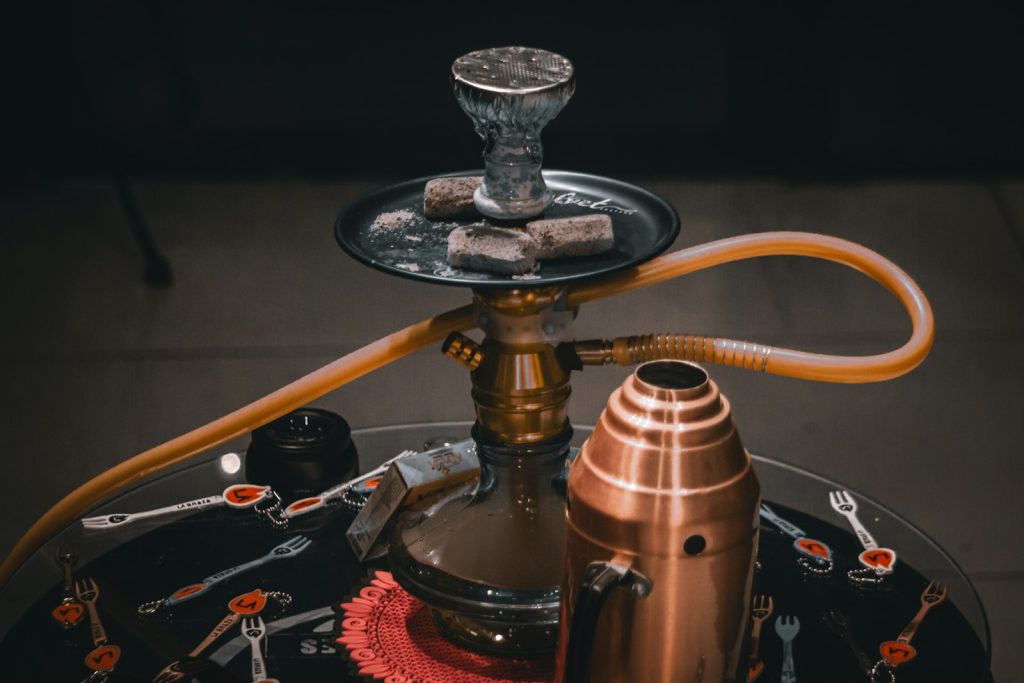
Hexagonal shisha charcoal is a coconut-shell shisha coal pressed into a long pillar with a hexagonal cross-section, then cut to length for hookah use. In our export desk, “hex” (or hex cut shisha coal) refers specifically to extruded, low‑ash, high fixed‑carbon sticks intended for premium European lounges that want a distinctive presentation and stable performance.
What Is Hexagonal Shisha Charcoal?
Hexagonal hookah charcoal is made from carbonized coconut shell that is ground, mixed with food-grade binders and water, then extruded through a hexagonal die and cut into pillars (typically 20–50 mm long). After pressing, the sticks are dried and re‑carbonized to stabilize their structure and reduce volatile matter.
Key characteristics of hex coconut charcoal for hookah:
- Shape: Hexagonal cross‑section (usually 20–22 mm across flats), pillar length tailored to brand preference.
- Raw material: 100% coconut shell charcoal fines (no wood filler in premium/super‑premium tiers).
- Use case: Long sessions in lounges, often for heat‑intensive heads and multi‑hose setups.
- Market positioning: Above standard cubes in FOB price; sold as a premium aesthetic and performance product.
Hex charcoal hookah sticks are common in Germany, the Netherlands, and France among cafés that want a different visual vs. the typical 25 mm cube, while retaining strictly controlled ash and burn consistency.
Why Hex Shape? Functional and Commercial Reasons
Surface‑to‑Air Ratio and Heat Management
The hex pillar geometry changes how the coal behaves on the tray or HMD:
- Higher sidewall area vs. a cube of comparable mass, which:
- Improves oxygen access along the length.
- Helps maintain a more uniform glowing surface.
- More stable rolling behavior than round sticks due to flat facets.
- Stacking flexibility: Hexes can be placed:
- Parallel (for gentle heat over a larger area).
- Criss‑crossed (to intensify heat with airflow gaps).
In practice, lounges using 20–22 mm hexagonal hookah charcoal report:
- Quicker heat-up vs. thick cubes of identical formulation, given more exposed area.
- Slightly shorter peak burn time than equal‑weight cubes, but with a more even decline in heat output.
Premium European Aesthetic
For European premium markets, the hex pillar is as much about presentation as performance:
- Distinctive visual: Hex cut shisha coal is immediately recognizable on the tray.
- Branding potential: The shape supports “signature coal” narratives in lounge menus and B2C packaging.
- Perceived upgrade: Many EU consumers associate hex charcoal hookah formats with higher‑end cafés and curated coal service.
This aesthetic aspect is reflected in FOB. Hex pillars usually sit in a higher price band than 25 mm cubes made from the same base formulation, primarily due to tooling, slower throughput, and higher rejection rates to maintain straightness and dimensional tolerances.
Engineering Constraints of Hex Pillars
Hex extrusions carry different constraints for the factory floor:
- Mechanical robustness: Long, slim shapes are more prone to cracking and bending if not dried and re‑carbonized correctly.
- Moisture gradients: Poor drying profiles can cause internal stress and micro‑cracks, which may only show up after ocean transit.
- Dimensional control: To fit EU‑standard boxes and sleeves, cross‑section and length must be consistent within tight tolerances.
That is why most Indonesian exporters (ourselves included) position hex as a super‑premium or high‑premium tier only. Trying to push this geometry into a budget segment leads to unacceptable breakage and variability.
Technical Specs for Hexagonal Coconut Hookah Charcoal
Specifications are typically tighter for hex pillars than for bulk cubes, because the target market is more demanding (premium EU lounges, brand‑owner importers). Ranges below are indicative of super‑premium Indonesian coconut‑shell hex, based on lab reports and industry norms.
Core Chemical Parameters
- Fixed Carbon (FC): ~78–82% (d.b.) for premium hex; 75–78% acceptable for some standard premium labels.
- Ash Content: ~1.5–2.0% for super‑premium; up to ~2.5% for high‑premium lines.
- Volatile Matter: ~12–15% for standard hookah use (too low can cause ignition difficulty; too high can make smell/spark issues).
- Moisture (as packed): Usually targeted <6% to reduce mold and self‑ignition risk during transit.
All these are lab‑reported **ranges**, not single‑point guarantees. Individual lots vary. Any serious importer should verify via independent testing (SGS, Intertek, or a reputable local lab) on arrival, not only pre‑shipment.
Physical and Performance Parameters
- Shape: Hexagonal, extruded.
- Across flats: Typically 20–22 mm.
- Length: Commonly 35–50 mm (e.g., 20×50 mm) depending on brand preference.
- Weight per piece: ~12–18 g depending on dimensions and density.
- Bulk density: Typically 0.95–1.1 g/cm³ for super‑premium shell‑only briquettes.
- Calorific Value (HHV): Commonly ≈6,500–7,200 kcal/kg for coconut‑shell briquettes with ~80% FC.
- Burn time:
- On open tray, still air: ≈80–110 minutes for 20×50 mm hex, depending on stove and draw.
- Under HMD/foil in lounge conditions: comparable heat delivery to two 25 mm cubes of similar FC.
- Ignition: Designed for natural coal burners (≈800–950 °C). Not formulated as self‑lighting.
What Lab Tests Actually Tell You
Lab reports (SGS or equivalent) on hexagonal shisha charcoal typically cover:
- Moisture.
- Ash content.
- Fixed carbon and volatile matter (by difference via proximate analysis).
- Sometimes heavy metals or contaminants if requested.
They do not tell you:
- How the coal feels in real‑world café use (heat curve, flavor neutrality under your tobacco and HMD).
- Breakage rates after 30–45 days at sea.
- Consistency between batches six months later.
For a B2B buyer, treat lab specs as a filter, not a full guarantee. Use them to weed out obviously poor product, but still conduct in‑house burning tests on production samples before committing to a private‑label program.
Typical Hex Versus Cube: Objective Comparison
Below is a high‑level comparison for super‑premium Indonesian coconut‑shell briquettes, hex vs. 25 mm cubes, using similar formulations.
| Parameter | Hexagonal Pillar (e.g., 20×50 mm) | 25 mm Cube |
|---|---|---|
| Target Fixed Carbon | ≈78–82% | ≈75–80% |
| Target Ash | ≈1.5–2.0% | ≈1.5–2.5% |
| Single‑piece Mass | ≈12–18 g (size‑dependent) | ≈10–12 g |
| Burn Time (single piece, open tray) | ≈80–110 min | ≈60–90 min |
| Ignition Time on Natural Burner | ≈6–9 min | ≈5–8 min |
| Relative FOB Price | Higher (tooling + slower throughput) | Lower (standard format, higher productivity) |
| Breakage Sensitivity | Higher if drying poorly controlled | Lower; cubes are mechanically robust |
| Brand Positioning | Premium / lounge‑focused | Mass‑market + premium |
If you are evaluating formats for your brand, request like‑for‑like FC and ash specs across both shapes, and then test in the same bowls and HMDs for a fair comparison.
Super‑Premium Hex Tier: What “Premium” Actually Means
In EU import conversations, “super‑premium” hexagonal shisha charcoal is often used loosely. We treat it narrowly, based on measurable and process‑based criteria.
Measured Targets for Super‑Premium Hex
Indicative targets (not guarantees):
- Fixed carbon: ≥80% on a dry basis for flagship SKUs; borderline lots 78–79% should be clearly labeled as “premium”, not “super‑premium”, in our internal QC.
- Ash content: 1.5–1.8% typical; anything above 2.0% is downgraded unless buyer explicitly accepts higher ash for cost reasons.
- Odor profile: Neutral on cold sniff; minimal off‑gassing on first light.
- Ignition behavior: No harsh flare‑ups, minimal sparking on standard stainless or coil burners.
Process and Material Criteria
Beyond lab numbers, super‑premium hex coconut charcoal generally implies:
- Shell‑only raw material: No forestry wood, sawdust, or coal dust additions.
- Consistent granulation: Fines and coarse particles screened consistently before mixing.
- Binder: Food‑grade starch; no unknown additives to force ignition or brightness.
- Double‑stage drying and re‑carbonization: Particularly critical to avoid internal cracking in pillars.
- Higher frequency sampling: More frequent line‑checks for dimension, density, and visible cracks.
You should still confirm this with the supplier. “Super‑premium” is not a regulated term; you are relying on the exporter’s internal QC discipline and your own due diligence.
Product Dimensions and Customization Options
Standard Hex Sizes for European Market
For Germany, the Netherlands, and France, we most often see:
- 20×50 mm hex pillars:
- Good balance between handling and burn time.
- Three sticks per bowl typical for lounge setups.
- 22×50 mm hex pillars:
- Slightly heavier, more thermal mass.
- Favored by some German lounges that run high heat.
Other lengths (35–45 mm) are technically possible but may complicate packing efficiency and FOB economics.
Custom Specs and MOQ Implications
Custom hex cut shisha coal (non‑standard across‑flats or length) has implications:
- Tooling: New dies and potential adjustment of extruder configuration.
- Process tuning: Drying times and temperatures may need recalibration.
- MOQ: Higher than for cubes or standard hex, to justify setup and tooling costs.
As a working guideline:
- Standard hex sizes: MOQs similar to or slightly above cubes per SKU.
- Custom hex shapes: Expect MOQs per design that are materially higher; exact figures are negotiated case‑by‑case with the factory.
Before you commit, request:
- Detailed drawing (cross‑section, length, tolerance).
- Test batch (e.g., 2–5 cartons) shipped by air for burn and packaging trials.
- Adjustment cycle: at least one iteration before locking cartons and artwork.
Packaging for Premium Hexagonal Hookah Charcoal
Because hex is aimed at premium cafés and brand lines, packaging expectations are higher than for bulk cartons of cubes.
Inner Packaging: Protecting Shape and Integrity
For hex pillars, inner bags do more than carry branding; they protect against:
- Mechanical damage: The longer sticks can snap under vibration if not packed tightly.
- Moisture ingress: Excess moisture can weaken pillars and increase mold risk.
Common options:
- Printed inner boxes (e.g., 1 kg with multiple sticks in a poly‑lined cardboard box).
- Inner plastic bags (poly or metallized), then into branded folding cartons.
- Shrink‑wrapping for additional tightness where lounges prefer “no rattle” packs.
For premium EU markets, exporters often recommend:
- Food‑grade liners.
- Carton strength rated for vertical stacking in 20′ or 40′ containers.
- Clear batch coding (production date, lot ID) for traceability.
Outer Cartons and Palletization
Outer cartons for hex charcoal hookah product typically mirror cube logistics:
- Master carton weight: Usually 10 kg or 20 kg net, depending on your downstream handling systems.
- Carton spec: Double‑wall, taped or strapped, with moisture‑resistant outer surface desirable for long sea voyages.
- Palletization: Often EURO‑ or ISO‑palletized, stretch‑wrapped, with corner protectors for EU warehouse handling.
Ask explicitly for:
- Stacking test data or at least carton burst strength specs.
- Pallet layout diagrams (cartons per layer, layers per pallet).
- Estimated cartons per FCL (20′ and 40′) under your chosen packaging configuration.
If you want detailed packaging engineering for a potential FCL program, you can plan your trip through your sourcing cycle with us via email or WhatsApp. We can walk through carton choices, pallet layouts, and EU handling constraints before you commission artwork.
Buyer Markets: Germany, Netherlands, France, and Beyond
Germany
Germany remains a key destination for hexagonal shisha charcoal:
- High density of shisha lounges with strict expectations on odor neutrality and ash control.
- Importers are generally comfortable asking for detailed specs and multi‑page lab reports.
- Private‑label B2C brands often differentiate with hex shapes as a visible quality cue.
German buyers typically require:
- Clear FC and ash specs on pro forma invoices.
- SGS (or equivalent) pre‑shipment inspection as a contractual condition.
- Compliance with local packaging and labeling norms (German language, recycling symbols, etc.).
Netherlands
Dutch importers often act as redistributors to the wider EU:
- Expect strong carton and pallet integrity due to frequent cross‑docking.
- Use a mix of hex and cube, with hex skewed to lounge accounts.
- Some demand FSC or other sustainability documentation linked to coconut sourcing, even though shells are agricultural by‑products.
For Rotterdam‑bound shipments, container optimization and handling at transshipment ports matter more than micro‑FOB differences per carton.
France
French premium cafés and bar‑shisha hybrids increasingly use hex coconut charcoal:
- Focus on smoke smoothness and minimal interference with flavor profiles.
- Strong emphasis on design of inner box for retail shelves.
- Growing acceptance of English‑language lab reports, but local labeling is still required.
For all three markets, be prepared to validate product repeatedly with your own end‑users. Lounge feedback (heat curve, ash behavior, smell) should sit alongside SGS numbers in your supplier assessment.
FOB Ranges, HS Codes, and Incoterms for Hex Coconut Charcoal
HS Code and Classification
Hexagonal shisha charcoal made from coconut shell is generally exported under:
- HS Code: 4402.90 – “Other charcoal (including shell or nut charcoal), whether or not agglomerated”.
Always confirm with your customs broker or local authorities; classification can be sensitive to product description and national interpretations.
Indicative FOB Price Ranges (Last Verified June 2026)
FOB prices for hex coconut charcoal vary with:
- Specification (FC %, ash %, lab test scope).
- Shape and size (hex vs cube; pillar dimensions).
- Packaging complexity (plain bulk vs fully printed retail boxes).
- Volume (sample, LCL, first FCL, long‑term contract).
As a general directional statement (for planning only, not a quotation):
- Hexagonal shisha charcoal FOB Indonesia usually sits above equivalent‑spec 25 mm cubes from the same plant.
- Premium/super‑premium hex pillars can be in a band that reflects:
- Higher processing and rejection costs.
- Denser packaging requirements.
Any realistic sourcing exercise should obtain live offers based on:
- Exact FC and ash ranges you will accept.
- Detailed packaging breakdown (inner bag/box, master carton, palletization).
- Target port, shipment window, and payment terms.
FOB price ranges you see advertised online are often either outdated or based on lower specs than implied by the marketing copy. Treat them as starting points, and verify via a firm pro forma invoice plus sample burn tests.
Incoterms: FOB vs CIF vs DAP
Most EU importers of hexagonal hookah charcoal from Indonesia opt for:
- FOB Indonesian port (e.g., Tanjung Priok, Tanjung Perak), arranging sea freight and insurance themselves.
Alternatives exist:
- CIF (Cost, Insurance and Freight) to your port, if you prefer the exporter to arrange main carriage.
- CFR without insurance, where you handle coverage through your own insurer.
- DAP/DDP in select cases where a regional distributor handles import and onward delivery.
Each choice affects your landed cost structure and risk profile. Align Incoterms with your internal logistics capabilities and credit arrangements, not purely on nominal FOB/CIF price deltas.
FCL‑Ready Logistics and SGS Pre‑Shipment
FCL‑Ready Means More Than “We Can Fill a Container”
For hex cut shisha coal, “FCL‑ready” should mean:
- Stable monthly capacity at your specification (not just occasional one‑off runs).
- Container loading plans that account for palletization, weight distribution, and carton crush limits.
- Moisture management (ventilated containers, desiccant use where suitable) for 30–45 days at sea.
Ask any potential supplier:
- How many FCLs per month can be produced at your exact hex spec?
- What is their standard stuffing configuration for hex cartons?
- What carton rejection and breakage data they track over the last 12 months?
SGS Pre‑Shipment Inspection: What It Does and Doesn’t Do
Our default approach for serious EU buyers is to include SGS pre‑shipment inspection as part of the process. Practically, this may cover:
- Visual inspection of cartons and labeling.
- Sampling of briquettes for lab testing (moisture, ash, FC, and volatile matter).
- Verification of quantity vs. packing list.
Limitations:
- SGS sees the lot before the stresses of ocean transit.
- Results are only as representative as the sampling plan.
- They do not measure “hookah session quality”; they measure lab parameters.
Use SGS as part of a layered quality strategy:
- Factory process audits (where possible).
- Pre‑shipment lab and visual inspection.
- On‑arrival spot checks in your warehouse.
- Routine burn tests by your own QC or lounge partners.
What You Should Independently Verify as a Buyer
For hexagonal shisha charcoal, a professional importer should personally verify:
- Dimensional consistency: Measure across flats and length from random samples across cartons.
- Mechanical strength: Simple drop tests and squeeze tests to estimate in‑transit breakage risk.
- Odor and taste neutrality: Burn tests using your actual bowls, tobaccos, and HMDs.
- Ash behavior: Color, texture, and ease of tap‑off during realistic 60–90 minute sessions.
- Re‑order consistency: Compare lab and burn behavior of repeat shipments over time.
Do not rely solely on one perfect sample shipment. QC drift can occur in any factory; your contract terms and requalification protocols are your main tools to keep product within your accepted window.
If you want support building a practical QC checklist tailored to hex charcoal hookah imports, you can plan your trip through the sourcing and testing stages with us via WhatsApp or email before placing a large order.
How to Brief and Assess a Hex Charcoal Supplier
A clear technical brief will save months of back‑and‑forth. For hex coconut charcoal, include at minimum:
- Target FC and ash ranges, with clear “reject” thresholds.
- Exact size (across flats × length) with tolerance (+/− in mm).
- Preferred burn time window and test protocol (e.g., coal burner type, time to full ignition).
- Packaging hierarchy:
- Sticks per inner box or bag.
- Inner units per master carton.
- Master cartons per pallet.
- Lab reports required (parameters and sampling frequency).
- Mandatory pre‑shipment inspection body (SGS, etc.).
- Incoterm and destination port.
When evaluating responses:
- Check for numerical clarity: Are FC and ash given as ranges, not just “high” and “low”?
- Ask for recent third‑party lab reports linked to the exact formulation they propose for you.
- Request unedited photos/videos from the packing line and loaded cartons.
- Insist on production samples, not “show samples” that may be from a different process.
Frequently Asked Questions: Hexagonal Shisha Charcoal
What fixed carbon and ash levels should I target for premium hexagonal shisha charcoal?
For European premium lounge use, many importers look for coconut-shell hex with fixed carbon around 78–82% and ash in the 1.5–2.0% range. Going much higher in FC can make ignition slower and may not yield proportional performance gains, while allowing ash to creep above about 2.5% usually starts to affect cleaning routines and perceived quality. Always verify these numbers with independent lab tests on each significant lot.
Why is hexagonal hookah charcoal usually more expensive than cubes from the same supplier?
Hex pillars are produced by extrusion and cutting, then dried and re-carbonized in a way that must protect relatively long, slender sticks. This requires specific tooling, slower throughput, tighter process control, and often higher rejection rates compared with 25 mm cubes. The result is higher unit processing cost. If a hex offer is priced below comparable cube product from the same origin, scrutinize the material content and QC regime closely.
How many hex coconut charcoal sticks are typically used per bowl in lounges?
In the German, Dutch, and French lounge segments using 20–22 mm hex pillars at about 50 mm length, two to three sticks per bowl is common, depending on the tobacco, bowl design, and desired session length. Some operators start with two sticks and add a third mid-session. The exact pattern is a practical decision, not a spec-sheet item, so test with your own hardware before fixing service standards.
Can I mix hex and cube shapes in the same brand line or container?
Yes, many importers run both hex and cube formats under one brand, sometimes within the same container but separated by SKU. Operationally, you must ensure each SKU has its own clear specification, packing list, and labeling. From a QC perspective, treat hex and cube as distinct products: they have different mechanical behavior, packing densities, and burn characteristics, even if the base formulation is similar.
What is the minimum order quantity (MOQ) for custom-size hex cut shisha coal?
For standard hex sizes (such as 20×50 mm), MOQs are similar to, or slightly higher than, those for 25 mm cubes per SKU. Custom sizes with non-standard cross-sections or lengths generally require higher MOQs to cover tooling and process-tuning costs. Exact figures depend on the factory and contract terms, so you should obtain a written MOQ and pricing proposal alongside samples and lab reports before committing artwork or marketing budget.