Honest sourcing note: Coconut shisha charcoal is a natural product, so ash, fixed carbon, moisture and volatile matter are stated as tier bands — super-premium typically 1.6–2.0% ash and ≥80% fixed carbon — not zero-variance figures. Final specs are confirmed per purchase order and SGS pre-shipment lab analysis. FOB and CFR figures are indicative ranges last verified June 2026 and move with shell cost, kiln fuel, labor and freight; final pricing is by quote, never posted as fixed. MOQ is one full container (20ft or 40ft HQ); we ship FCL only. We are an independent Indonesian export desk — not a single plantation or factory — aggregating vetted producers in Sulawesi, North Maluku and Java. Import duties and rules are your responsibility; this is general information, not legal advice.
Coconut charcoal vs quick light is essentially natural charcoal vs chemically accelerated disks. Both are compressed fuels for shisha, but they light, burn, and taste very differently, and they suit different markets.
What “Quick-Light” and “Coconut” Shisha Charcoal Actually Are
Quick-light shisha charcoal: definition and composition
Quick-light (also called instant-light or self-lighting) shisha charcoal is typically a round tablet or disk made from a base fuel (often wood charcoal powder) combined with chemical oxidizers and binders so it ignites with a match or lighter in seconds.
Typical characteristics:
– **Base material:** wood charcoal powder (sometimes mixed with other biomass)
– **Accelerants:** commonly potassium nitrate and similar oxidizers
– **Form factor:** 33–40 mm tablets or disks, usually silver-foil wrapped in rolls
– **Lighting time:** ~30–60 seconds with a lighter or match
– **Odor/sparks:** noticeable ignition odor and sparking as chemicals react
These disks are designed for **maximum convenience**, not for neutral flavor or low ash.
Coconut shisha charcoal: definition and composition
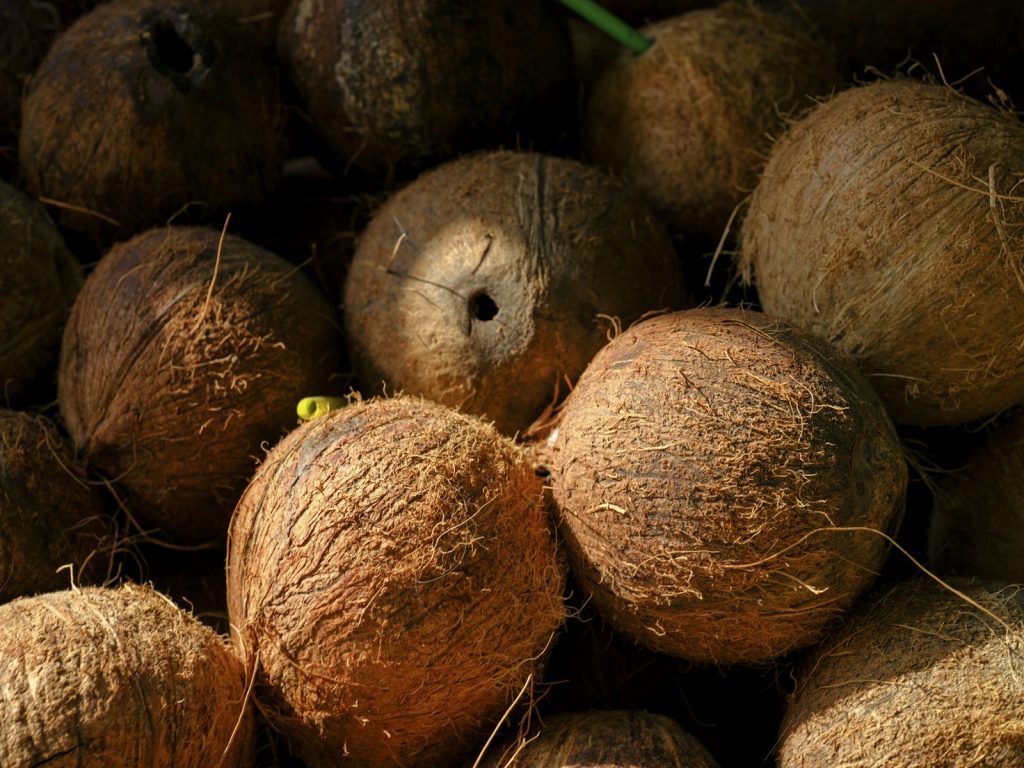
Coconut shisha charcoal (often shortened to “coco” or “coconut cube”) is a **natural charcoal** made from carbonized coconut shells, then milled and pressed into shapes such as 25 mm cubes, 26 mm cubes, hexagonal sticks, flats, or “finger” shapes.
Typical characteristics for export-grade coconut-shell shisha charcoal:
– **Raw material:** 100% coconut shell charcoal fines (no wood blend for genuine specs)
– **Binders:** food-grade starch (commonly tapioca), typically ≤5%
– **Chemicals:** no ignition accelerants; lights “naturally”
– **Lighting time:** ~5–8 minutes on an electric coil or gas burner
– **Form factor:** 22–27 mm cubes, flats, hex logs, or custom shapes
– **Intended use:** shisha/hookah lounges, export retail packs, private labels
Our export desk supplies **only coconut-shell natural shisha charcoal**, in multiple quality tiers. We do **not** export quick-light or self-lighting products.
Technical Comparison: Natural Coconut Charcoal vs Quick Light Shisha
Below is a condensed technical and practical comparison. Figures are indicative ranges based on common market specs and independent lab results we see in the Indonesian export trade; always verify the exact spec sheet and test reports from the factory you contract.
| Parameter | Coconut-shell natural shisha charcoal | Quick-light / self-lighting charcoal disks |
|---|---|---|
| Lighting method | Electric coil, gas stove, or torch; 5–8 min preheat | Match or lighter; ~30–60 sec |
| Raw material | Coconut shell charcoal fines + starch binder | Typically wood charcoal powder + accelerants, binders |
| Chemical accelerants | None added (natural charcoal) | Yes (e.g., potassium nitrate and related oxidizers) |
| Fixed Carbon (FC) | ~75–82% for export shisha grades (lab-tested, dry basis) | Typically lower, wide range; accelerants reduce FC % |
| Ash content | Super-premium: ≤1.5%; Premium: 1.5–2.0%; Mid: 2–3% | Often visibly higher ash; 5%+ is common in mass-market product |
| Ash color | Light grey to white (varies by mix and furnace) | Grey to dark; can be uneven with flakes |
| Burn time (25–26 mm cube vs 33–40 mm disk) | ~90–120 minutes under lounge-style use | ~30–45 minutes typical |
| Flavor impact | Neutral; designed to minimize off-taste | Characteristic “chemical” taste, especially at start |
| Smoke cleanliness | Low visible smoke when fully lit | More smoke during ignition from accelerants |
| End-user segment | Lounges, serious home users, flavor-focused brands | Convenience/home, festivals, casual users |
| Equipment required | Coil/burner is essentially mandatory | No extra equipment; just lighter or match |
| Typical HS Code (import) | HS 4402.90 – “Coconut shell charcoal briquettes” (check local tariff line) | Often also under 4402.90 or specific national subheadings |
Natural Charcoal vs Quick Light Shisha: What Importers Actually Care About
From an import and distribution perspective, the “natural charcoal vs quick light shisha” debate is less about ideology and more about:
– What your **end customers expect**
– How your **regulators classify and test** the product
– Your **brand positioning** (lounge-quality vs convenience)
Regulatory and labeling angles
Most jurisdictions:
– Treat both quick-light and coconut shisha charcoal as **solid fuels** under HS 4402.x, but local tariff lines and duties can differ.
– May have additional rules on:
– Chemical additives (especially oxidizers) in **self-lighting charcoal**
– Safety warnings for indoor use
– Packaging and transport (IMO/ADR rules for some formulations)
If you import **self lighting charcoal vs natural**, check:
1. **Tariff line:** Some customs authorities distinguish “chemically treated” briquettes.
2. **Safety data sheet (SDS):** Quick-light should be accompanied by an SDS describing oxidizers and handling.
3. **National restrictions:** Certain markets restrict or heavily control oxidizer content.
For coconut charcoal:
– Documentation typically includes:
– MSDS/SDS for coconut-shell briquettes
– Fumigation certificate where required
– Origin statement (Indonesia)
– Lab results for ash, FC, moisture, sometimes heavy metals/contaminants if requested by the importer
Brand positioning and channel fit
Broadly:
– **GCC lounges and serious shisha bars** have gravitated heavily toward **coconut-shell natural charcoal** because of:
– Lower ash
– Neutral impact on flavor
– Longer burn, fewer coal changes per session
– **Convenience segments** – festival vendors, casual home users, some tourist locations – still use **quick light** because:
– No coil required
– Lighting is intuitive and fast
– Unit cost per roll can be low, even if TCO per hour of burn is higher
Your margin story differs:
– With **quick light vs coconut hookah charcoal**, the price per tablet may look cheaper, but per hour of burn and per “session experience,” coconut often wins in higher-value channels.
– Consumers paying for premium flavors and lounge ambiance rarely tolerate the ignition smell and taste of quick-light once they’ve experienced good coconut cubes.
Performance: Burn Time, Ash, and Flavor in Real World Use
Burn time by shape and type
The shape of your charcoal matters almost as much as the material.
Typical real-world ranges (not lab-only):
– **Coconut 25–26 mm cube:**
• 90–120 minutes in a wind-shielded bowl, rotated periodically
• Some “competition” mixes run hotter/shorter; some denser mixes run longer but light slower
– **Coconut flats / fingers / hex logs:**
• Flats: ~60–90 minutes, faster heat-up and more responsive
• Fingers/hex logs: can exceed 90 minutes, often used for traditional heads
– **Quick-light 33–40 mm disk:**
• ~30–45 minutes until heat output becomes marginal
• Rapid initial peak, then faster drop-off vs dense coconut cubes
If your channel is lounges billing per session, fewer coal changes matter operationally: staff time, ash mess, and guest perception of quality.
Ash content and handling
For coconut-shell shisha charcoal exported from Indonesia, ash content is a core quality metric. Common tiers (dry basis):
– **Super-premium:**
• Target ash: **≤1.5%**
• FC typically **>80%**
• More stringent raw material selection and slower carbonization
– **Premium:**
• Ash: **1.5–2.0%**
• FC usually **78–80%**
– **Standard/mid-tier:**
• Ash: **2–3%**
• FC can dip into **75–78%** range
These ranges are drawn from typical export specifications and independent lab testing patterns, not from any single factory’s marketing.
Quick-light disks:
– Rarely publish ash % because accelerants and inorganic residues push the number higher.
– In practice, you can expect:
– **More volume of ash per tablet**
– **Less cohesive ash** that flakes and blows easily
– For outdoor and festival use this may be acceptable; for an indoor lounge with dark furniture, it isn’t.
Flavor impact and user experience
Coconut vs quick light hookah is very obvious to the end user:
– **Quick-light:**
• Noticeable smell during ignition (often described as “fireworks” or “chemical”)
• Residual taste, especially if the coal is put on the bowl before it is fully ashed-over
• More complaints from flavor-focused customers and experienced smokers
– **Coconut natural:**
• Essentially neutral if fully lit before placement
• Any off-notes usually come from improper lighting (e.g., black core) or poor-quality raw shell with contaminants
• Lets the molasses/tobacco flavor dominate, which is what high-end lounges charge for
If your brand promises “premium taste” or you target GCC or EU lounges, quick-light is inconsistent with that value proposition.
Market Split: Who Buys Which Type?
Regions favoring coconut-shell natural charcoal
Patterns we see among importers and distributors:
– **Gulf Cooperation Council (GCC) markets:**
• High adoption of coconut-shell cubes and flats in lounges and better home retail
• Many buyers demand ash ≤2% and FC ≥78% as a baseline
• Quick-light still exists in low-end retail, but it’s a different shelf segment
– **Europe (EU/UK):**
• Strong movement toward “natural” and cleaner-burning products
• Coconut cubes and flats dominate in specialist shisha shops and lounges
• Regulatory pressure and consumer expectations discourage chemical accelerants
– **North America:**
• Mixed: serious shisha users actively seek coconut cubes; casual users at convenience stores may still reach for quick-light rolls
• Regulations on chemicals and labeling vary by state/province
Channels where quick-light still makes sense
Despite its drawbacks, quick-light has a clear niche:
– **Festivals and outdoor events**
• Limited access to power for electric coils
• High customer turnover; speed overrides flavor optimization
– **Tourist kiosks and casual bars**
• Non-specialist staff; simple “light and serve” routine
– **Entry-level home users**
• No investment in coils yet
• Just experimenting with hookah, lower expectations
If you distribute into these channels, you may choose to carry both product types, but you should separate the branding. Do not present quick-light as “premium”; your informed customers will disagree.
We specialize only in **natural coconut-shell shisha charcoal** and focus our technical and QC efforts there. For quick-light sourcing, we can’t add value beyond high-level due diligence comments because we do not handle that line.
Spec Sheets: What Numbers Actually Matter?
Key parameters for coconut-shell shisha charcoal
When you receive a spec sheet for coconut shisha charcoal, core parameters usually include:
– **Fixed Carbon (FC %)**
• Indicates the carbon fraction after deducting moisture and ash
• Higher FC generally means more energy per gram and more stable burns
• For shisha use, **78–82%** is a typical range of competitive material
– **Ash (%)**
• Lower is better for user experience and heat efficiency
• Ranges by tier as discussed above
• Be cautious of unrealistically low claims (e.g., “0.5% ash”) without reputable third-party lab reports
– **Moisture (%)**
• Usually in the **5–8%** range for properly dried export product
• Higher moisture slows lighting and can cause micro-explosions when water flashes to steam
– **Volatile matter (%)**
• Impacts ignition characteristics and flavor neutrality
• Excessive volatiles can introduce smell and smoke during ignition
– **Shape, size, and tolerance**
• Standard cube sizes: 22, 25, 26, 27 mm
• Tolerance of ±0.5 to ±1 mm is common
• Size consistency matters for uniform heating in lounges
We arrange **SGS pre-shipment inspection and testing** where specified by the buyer. That covers ash, FC, moisture, and visual inspections against the agreed spec. Always treat third-party lab numbers as **batch-specific**, not universal guarantees.
How to interpret quick-light specs
Self-lighting products often emphasize:
– **Lighting time (“instant” or seconds value)**
– **Diameter and thickness** of disks
– Sometimes **odor claims** (“low odor”)
You should still request:
– A complete **material declaration** (charcoal base + accelerants)
– An **SDS** with handling and chemical hazard classifications
– Any **national test reports** if your market has specific restrictions
Because we do not export quick-light, we cannot give you reliable FOB ranges or performance guarantees here. Treat supplier “low odor” and “clean taste” claims carefully; test in-market.
Pricing, HS Codes, and Incoterms for Coconut-Shell Shisha Charcoal
FOB ranges for coconut-shell shisha charcoal
FOB pricing depends on:
– Quality tier (ash %, FC %, density)
– Shape/size (standard cube, customized, flats, fingers)
– Packaging (bulk master cartons vs color retail boxes)
– Order volume and port
Based on Indonesian export trade patterns **last verified June 2026**, broad **FOB Indonesia** ranges per metric ton for coconut-shell shisha charcoal might look like:
– **Super-premium (≤1.5% ash, FC ≥80%)**
• FOB: at the upper end of the market range
– **Premium (1.5–2.0% ash, FC ~78–80%)**
• FOB: mid-high range
– **Standard (2–3% ash)**
• FOB: mid range suitable for price-sensitive markets
We do not publish fixed dollar numbers here because:
– Pricing is volatile (shell charcoal feedstock, freight, exchange rates).
– Different factories quote significantly different conversion yields and margins.
– Buyers negotiate differently based on Incoterms and payment terms.
To benchmark your supplier quotes, you can contact us with **target ash %, FC %, port, and Incoterm** for a sanity check.
HS codes most importers use
Most coconut-shell shisha charcoal moves globally under variations of:
– **HS 4402.90 – “Other charcoal (including shell or nut charcoal), whether or not agglomerated”**
Some countries use more detailed sub-codes specifically referencing:
– “Coconut shell charcoal briquettes”
– “Agglomerated charcoal of coconut shell”
Quick-light products may use the same HS root (4402) or, in some jurisdictions, a more specific line recognizing the chemical treatment. Always confirm with:
– Your **customs broker**
– Your **national tariff database**
Misclassification can expose you to retroactive duties or delays.
Incoterms and shipping format
We ship **FCL-ready** (Full Container Load) from Indonesian ports, commonly under:
– **FOB** (Free On Board) – you handle sea freight and insurance from port of loading.
– **CFR/CIF** – case-by-case where buyers prefer landed cost visibility.
Standard stowage:
– **20’ container:** approx. 13–14 MT net, depending on packaging
– **40’ container:** approx. 25–27 MT net
We do not typically consolidate quick-light or mixed cargo with coconut cubes due to:
– Different risk profiles (chemicals vs natural)
– Different buyer segments and inspection routines
For quote and vessel scheduling, you can plan your trip with us via email or WhatsApp; we treat each shipment as a commodity desk transaction, not a retail order.
Quality Control: What SGS and Labs Can and Cannot Guarantee
What third-party testing reliably covers
With **SGS pre-shipment inspection** (or equivalent reputable lab), you can reasonably verify:
– **Ash, FC, moisture, volatile matter** for the sampled lot
– **Dimension and weight checks** against your spec
– **Visual defects:** cracks, broken rate, contamination, color
– **Packaging compliance:** labeling, box weight, palletization
These results are **lot-specific snapshots**. They are good indicators of:
– Whether the supplier is roughly in the claimed quality tier
– Whether the production line at that moment is under control
What labs cannot promise you
No lab or inspection can give you:
– A guarantee that **all future lots** will perform identically.
– A universal “brand promise” for all cartons under your label.
– Protection against **feedstock changes** (e.g., supplier switching to cheaper shell sources or blending wood) unless you monitor continuously.
For that reason, we recommend:
– **Routine batch testing** (not just first container).
– Periodic **surprise sampling** (drawn at random from pallets).
– Physical **burn tests in your target market**, with your lounge or key retail clients.
We are candid with buyers: even the best SGS report is an **indication**, not a lifetime certificate.
Choosing Between Quick-Light and Coconut for Your Market
Scenarios where coconut-shell natural charcoal is the better choice
Choose coconut cubes/flats if:
– Your primary accounts are **lounges**, especially in GCC, EU, UK, or major North American cities.
– Your brand language emphasizes:
– “Premium”
– “Natural”
– “Clean flavor”
– Your customers already own or will easily accept:
– Electric coils
– Proper lighting routines
In these cases, **quick light vs coconut hookah charcoal** is not a serious contest: coconut wins on user satisfaction, and the “cost” is staff training and a small CAPEX for coils.
Scenarios where quick-light may still be justified
Quick-light is defensible if:
– You sell to **pop-up events, festivals, beach bars** with no reliable power.
– Your users are primarily **tourists or first-timers** with low expectations.
– Replacement speed and simplicity override all other factors.
We do not supply quick-light, so if this is your core business, our role is limited to advising that you:
– Vet your suppliers’ **chemical declarations** and SDS carefully.
– Conduct thorough **in-market testing** for odor and taste.
– Review any **local safety and labeling regulations** for accelerant-based fuels.
Hybrid strategies some importers use
Some distributors carry:
– A **flagship coconut line** for lounges and specialty stores.
– A **separate quick-light line** for convenience outlets.
If you pursue this path:
– Use **clear branding separation** to avoid confusing your premium customers.
– Educate retailers so that lounges are steered toward coconut, not default quick-light rolls.
For the natural segment, we can help you design specs, QC protocols, and packaging suitable for your market. You can plan your trip and send us your target ash %, FC %, port, and preferred WhatsApp contact to start the technical conversation.
What We Offer as an Independent Indonesian Coconut-Shell Export Desk
Scope of what we do:
– **Product:** Indonesian coconut-shell shisha charcoal only (natural, no quick-light).
– **Tiers:** From super-premium (≤1.5% ash) to standard (2–3% ash), tailored to your channel.
– **Format:** FCL-ready loads, FOB Indonesia or other Incoterms by agreement.
– **QC:** Third-party lab testing (including SGS) arranged pre-shipment, based on buyer’s spec.
What we do **not** do:
– We do **not** export quick-light, self-lighting, or chemically accelerated tablets.
– We do **not** guarantee retail pricing, only FOB or CFR/CIF ranges subject to confirmation.
– We do **not** override your local regulations; classification and compliance remain your responsibility.
Our position is simple: align the **charcoal type** with the **market segment**, then back that decision with transparent specs and verifiable tests.
FAQ
Is coconut charcoal healthier than quick-light for shisha?
No charcoal is “healthy”; all combustion produces CO and other byproducts. Coconut charcoal is preferred because it avoids chemical accelerants and usually has a cleaner ignition and more neutral taste. For actual health risk assessment, users should look at ventilation, CO monitoring, and tobacco composition, not just the charcoal.
How long do coconut cubes really last compared to quick-light tablets?
In real lounge use, a 25–26 mm coconut cube typically provides usable heat for around 90–120 minutes, while a typical 33–40 mm quick-light disk is closer to 30–45 minutes. Exact times depend on bowl type, airflow, and how often staff rotate or manage the coals.
Can I switch my lounge from quick-light to coconut without buying coils?
Practically no. Coconut charcoal needs a consistent, high-heat source such as an electric coil or gas burner to light properly in 5–8 minutes. Trying to light coconut cubes with a cigarette lighter is inefficient and leads to half-lit coals and bad taste.
What HS code should I use for importing coconut-shell shisha charcoal?
Most importers use HS 4402.90 for “other charcoal, including shell or nut charcoal, whether or not agglomerated,” often with a national subheading for coconut-shell briquettes. Always confirm the precise code and duty rate with your customs broker or local tariff database.
Do SGS tests guarantee every container will match the first sample?
No. SGS or any reputable lab can confirm that a specific sampled lot matches the agreed spec at that point in time. They cannot guarantee all future containers or all cartons will be identical. Ongoing batch testing, periodic surprise sampling, and your own burn tests are still necessary for consistent quality control.