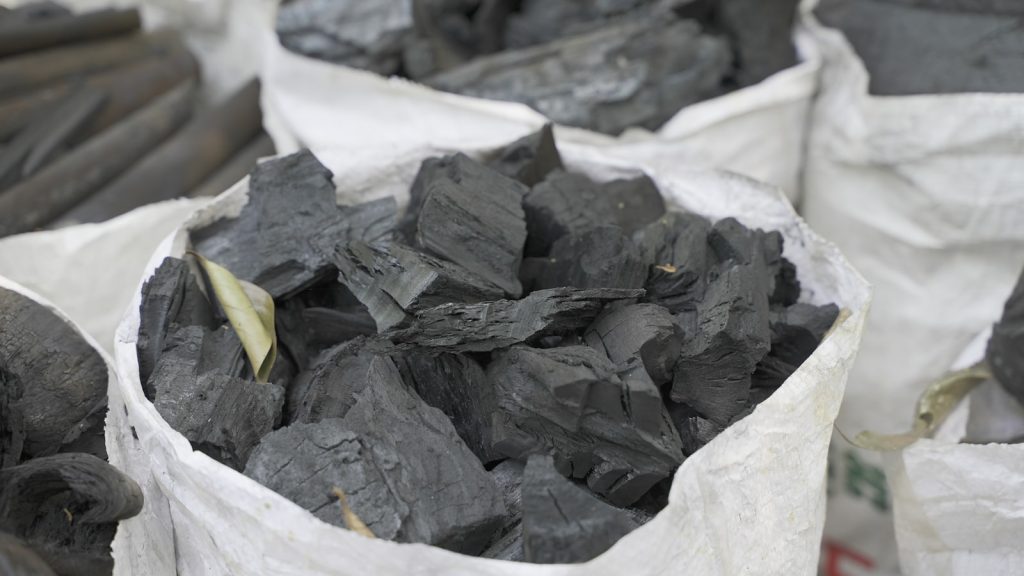
Honest sourcing note: Coconut shisha charcoal is a natural product, so ash, fixed carbon, moisture and volatile matter are stated as tier bands — super-premium typically 1.6–2.0% ash and ≥80% fixed carbon — not zero-variance figures. Final specs are confirmed per purchase order and SGS pre-shipment lab analysis. FOB and CFR figures are indicative ranges last verified June 2026 and move with shell cost, kiln fuel, labor and freight; final pricing is by quote, never posted as fixed. MOQ is one full container (20ft or 40ft HQ); we ship FCL only. We are an independent Indonesian export desk — not a single plantation or factory — aggregating vetted producers in Sulawesi, North Maluku and Java. Import duties and rules are your responsibility; this is general information, not legal advice.
For any business operating in the shisha industry, effective `hookah lounge charcoal buying` is not merely a purchasing decision; it is a critical operational and financial calculation. Understanding the true economics involves more than just the FOB price per metric ton; it requires a detailed assessment of `shisha cafe charcoal cost` per session, charcoal performance, and the impact on labor efficiency.
Understanding Hookah Lounge Charcoal Buying: Beyond the Price Tag
When evaluating `hookah lounge charcoal buying` options, the initial focus often defaults to the per-kilogram or per-metric-ton price. However, this narrow view overlooks the broader operational costs and revenue implications for a shisha lounge or cafe. A more comprehensive approach considers the charcoal’s physical properties, its burn duration, and how these factors contribute to customer satisfaction and operational overhead. The goal is to maximize the number of quality sessions delivered from each FCL (Full Container Load) while minimizing ancillary costs.
The Core Metrics: Ash, FC, and Burn Time
The fundamental characteristics of coconut shisha charcoal directly influence its performance and, consequently, its economic viability for a lounge.
* **Ash Content:** Expressed as a percentage of the total weight, lower ash content is universally preferred. Charcoal with 1.5-2.0% ash, common in super-premium grades, requires less frequent ash tray cleaning and creates less residue on the shisha bowl. This directly reduces staff labor and improves the aesthetic appeal of the smoking experience. Standard grades typically range from 2.0-3.0% ash.
* **Fixed Carbon (FC):** This metric indicates the purity of the charcoal. Higher FC percentages (e.g., >80% for super-premium, 75-80% for standard) correlate with longer, more consistent burn times and cleaner combustion. Higher FC means less volatile matter, resulting in a purer heat source that doesn’t impart unwanted flavors to the shisha tobacco.
* **Burn Time:** This is perhaps the most tangible metric for lounge operators. Super-premium charcoal from Indonesia typically offers 90-120 minutes of consistent heat, while standard grades burn for 60-75 minutes. This difference significantly impacts staff workflow and `charcoal cost per session hookah` calculations.
Shape and Size: Catering to Market Preferences
While the intrinsic quality metrics are universal, shape and size preferences are highly regional and dictated by local market demand and shisha preparation styles.
* **Cube (25x25x25mm, 26x26x26mm):** Predominantly preferred in the GCC (Saudi Arabia, UAE) and US markets. Cubes offer a larger surface area for consistent heat distribution and are often associated with a more traditional shisha experience. The 26mm cube is a popular choice for larger bowls and longer sessions.
* **Flat (25x25x15mm, 22x22x15mm):** Common in the EU (Germany, UK, France), flats are often chosen for smaller bowls or for users who prefer a quicker heat-up time. They allow for more precise heat management, especially for specific tobacco types.
* **Finger (e.g., 20x40mm):** A niche preference, primarily seen in some US markets, offering a unique aesthetic and heat profile.
Understanding these preferences is crucial for importers and distributors to ensure they stock products that resonate with their local clientele, thereby optimizing their own sales and reducing inventory holding times.
The Economics of Quality: Cost Per Session Analysis
The true `lounge hookah coal economics` are revealed when you move beyond the raw purchase price and analyze the cost per shisha session delivered. This calculation directly links the upfront investment in charcoal to the revenue generated.
Calculating Your True Shisha Cafe Charcoal Cost
Let’s break down the `shisha cafe charcoal cost` per session. Assume a typical shisha session uses 2-3 pieces of charcoal. For a standard 26x26x26mm cube, each piece weighs approximately 12-14 grams.
**Example Calculation (Indicative, based on 26x26x26mm cubes, 3 pieces per session):**
* **Charcoal Weight per Session:** 3 pieces * 13g/piece = 39g
* **FOB Price Range (Standard Grade, last verified June 2026):** USD 650-900 per MT
* **FOB Price Range (Super-Premium Grade, last verified June 2026):** USD 800-1100 per MT
**Scenario 1: Standard Grade (e.g., USD 750/MT FOB)**
* Cost per kg: USD 750 / 1000 kg = USD 0.75/kg
* Cost per gram: USD 0.75 / 1000g = USD 0.00075/g
* **Charcoal Cost per Session:** 39g * USD 0.00075/g = **USD 0.02925**
**Scenario 2: Super-Premium Grade (e.g., USD 950/MT FOB)**
* Cost per kg: USD 950 / 1000 kg = USD 0.95/kg
* Cost per gram: USD 0.95 / 1000g = USD 0.00095/g
* **Charcoal Cost per Session:** 39g * USD 0.00095/g = **USD 0.03705**
*Note: These figures represent the FOB cost only. They do not include freight, customs duties, local transport, or distributor markups, which must be added to derive a landed cost per session.*
While the super-premium charcoal has a slightly higher initial `charcoal cost per session hookah` based solely on weight, its extended burn time and superior performance introduce other cost efficiencies.
Super-Premium vs. Standard: Session Count and FCL Yield
The burn time difference between super-premium and standard charcoal directly impacts the number of shisha sessions that can be completed before coals need to be replenished or entirely replaced.
Let’s assume:
* Standard charcoal burn time: 60 minutes
* Super-premium charcoal burn time: 90 minutes
* Typical shisha session duration: 60-90 minutes (some lounges may allow longer)
With standard charcoal, a single set of coals (2-3 pieces) may only last for one full session, or require a mid-session change to maintain optimal heat. With super-premium charcoal, a single set can comfortably last for a full 90-minute session, potentially extending to 120 minutes with careful management, reducing the need for mid-session changes.
Consider an FCL (Full Container Load) of 20 metric tons (MT).
* **Total charcoal per FCL:** 20,000 kg = 20,000,000 grams
* **Sessions per FCL (Standard, 39g/session, 60 min burn):** 20,000,000g / 39g/session = approx. 512,820 sessions.
* **Sessions per FCL (Super-Premium, 39g/session, 90-120 min burn):** If each session requires fewer coal changes or lasts longer, the *effective* session count per FCL increases because fewer total pieces are consumed for the same duration of customer use. For example, if a 90-minute session with standard charcoal requires 2 sets of coals (78g), but only 1 set (39g) with super-premium, the super-premium effectively doubles the session yield from the same weight of charcoal.
This table summarizes the core differences:
- Charcoal Type
- Super-Premium Coconut Shell
- Standard Coconut Shell
- Ash Content
- < 2.0%
- 2.0 – 3.0%
- Fixed Carbon (FC)
- > 80%
- 75 – 80%
- Burn Time
- 90 – 120 minutes
- 60 – 75 minutes
- Impact on Labor
- Reduced coal changes, less ash disposal
- More frequent coal changes, more ash disposal
- FOB Price Range (Indicative, last verified June 2026)
- USD 800 – 1100/MT
- USD 650 – 900/MT
Labor Efficiency: The Hidden Value of Longer Burn
Beyond the direct `charcoal cost per session hookah`, one of the most significant cost savings from super-premium charcoal comes from labor efficiency.
* **Reduced Coal Changing:** If coals last 90-120 minutes instead of 60 minutes, staff spend less time circulating to change coals. This frees them up for other tasks, such as taking orders, cleaning, or preparing new shishas. Over the course of a busy evening, this can translate to several hours of saved labor, or the ability to serve more tables with the same staff headcount.
* **Less Disruption:** Fewer coal changes mean less interruption for customers, enhancing their experience. A continuously hot shisha without interruption improves customer satisfaction and encourages repeat business.
* **Lower Ash Management:** Less ash content and longer burn times mean less frequent ash tray emptying and overall cleaner operations, further reducing staff workload.
Ultimately, investing in higher quality charcoal is a margin play, not merely a cost center. The slightly higher initial purchase price is often offset by increased operational efficiency, higher customer satisfaction, and potentially higher table turnover or greater capacity utilization without increasing labor costs.
Market Dynamics and Regional Demands
The global market for shisha charcoal is diverse, with distinct preferences and price sensitivities across different regions. Understanding these nuances is key for importers to tailor their `hookah lounge charcoal buying` strategy.
GCC: The Pursuit of Purity and Consistency
Markets in the GCC, particularly Saudi Arabia and the UAE, exhibit a strong preference for super-premium coconut shisha charcoal. Their key demands include:
* **Ultra-Low Ash:** Typically requesting ash content as low as 1.5-2.0%. This ensures a clean burn and minimal interference with the shisha flavor.
* **High Fixed Carbon:** Over 80% FC is standard, guaranteeing long, consistent heat.
* **Shape:** Predominantly 25x25x25mm or 26x26x26mm cubes.
* **Burn Time:** 90-120 minutes is expected.
* **Consistency:** Reliability in batch-to-batch quality is paramount. Any deviation can lead to brand damage and loss of market share. Price is a factor, but quality and consistency often take precedence.
EU: Balancing Cost and Performance for Diverse Clientele
The European market, encompassing countries like Germany, the UK, and France, presents a more varied demand profile:
* **Ash Content:** Generally acceptable at 2.0-2.5%, with some premium segments demanding lower.
* **Fixed Carbon:** 75-80% FC is common, reflecting a balance between performance and cost.
* **Shape:** While cubes are popular, flat shapes (25x25x15mm, 22x22x15mm) also hold significant market share, catering to different shisha setups and user preferences.
* **Cost Sensitivity:** The EU market can be more price-sensitive than the GCC, but still values a good burn time and minimal flavor impact. Regulations around product safety and origin are also increasingly important.
US: Brand Perception and User Experience
The US market is dynamic and growing, with an emphasis on brand perception and the overall user experience:
* **Ash Content:** Similar to the EU, 2.0-2.5% ash is generally accepted, but premium brands aim lower.
* **Fixed Carbon:** 75-80% FC is standard, with a focus on consistent heat output and minimal odor.
* **Shape:** Cubes (25x25x25mm, 26x26x26mm) are dominant, but finger shapes also find a niche.
* **Online Presence & Reviews:** Brand reputation, driven by consistent quality and positive reviews, plays a significant role in purchasing decisions.
* **Logistics:** The vast geographical spread of the US means efficient logistics and reliable distribution networks are highly valued.
Indonesian Advantage: Price, Quality, and Supply Chain
Indonesia stands as a leading global supplier of coconut shell charcoal, offering a compelling blend of quality, volume, and competitive pricing. This positions Indonesian charcoal as a strong contender in `lounge hookah coal economics`.
Competitive Landscape: Indonesia vs. Thai/Sri Lankan Alternatives
The primary competitors for Indonesian coconut shisha charcoal are often Thailand and Sri Lanka.
* **Thailand:** Generally offers lower-priced charcoal, but often with higher ash content (3-5%) and lower fixed carbon (65-75%). While attractive on paper for initial `hookah lounge charcoal buying`, the inferior burn time and higher ash can lead to increased `charcoal cost per session hookah` due to more frequent coal changes and cleaning.
* **Sri Lanka:** Known for very high-quality charcoal, often commanding premium prices. Their production volume can be smaller, making them suitable for niche, ultra-premium markets.
* **Indonesia:** Strikes a balance. With vast coconut plantations across Sumatra, Sulawesi, and Kalimantan, Indonesia offers abundant raw material. This allows for consistent, high-volume production of both super-premium and standard grades at competitive FOB prices. Indonesia’s established export infrastructure further enhances reliability. The ability to supply a wide range of specifications, from ultra-low ash for the GCC to more cost-effective options for the EU, gives Indonesian suppliers a significant competitive edge.
Navigating FOB Ranges and MOQ
When considering `hookah lounge charcoal buying` from Indonesia, understanding pricing structure and minimum order quantities is crucial.
* **FOB (Free On Board) Ranges:** As previously stated, indicative FOB prices for standard grade coconut shisha charcoal typically range from USD 650-900/MT, and for super-premium grade, USD 800-1100/MT (last verified June 2026). These ranges are indicative and subject to fluctuations based on raw material availability, processing costs, energy prices, and global demand. Actual quotes will depend on specific quality specifications (ash %, FC %), packaging, and order volume.
* **MOQ (Minimum Order Quantity):** For direct factory sourcing and competitive pricing, the MOQ is almost universally one FCL (Full Container Load). This typically means 18-20 MT for a 20-foot container or 25-27 MT for a 40-foot container, depending on packaging density. Ordering less than FCL is possible through consolidators or distributors, but will incur higher per-unit costs.
For buyers focusing on `lounge hookah coal economics`, direct FCL sourcing from Indonesia offers the best opportunity for optimizing `shisha cafe charcoal cost` and ensuring consistent supply.
Ready to optimize your charcoal supply chain? We specialize in connecting buyers with reliable Indonesian producers across super-premium to standard tiers. plan your trip to better charcoal economics today, or reach out via WhatsApp for a direct consultation.
Verifying Your Supply: What to Ask Your Exporter
Transparency and due diligence are paramount in international commodity trade. As an importer or large-scale lounge operator, you must verify the claims made by your potential supplier.
SGS Inspection: Your Assurance
Always insist on third-party pre-shipment inspection from a reputable agency like SGS. This is a non-negotiable step for serious `hookah lounge charcoal buying`. SGS reports provide independent verification of:
* **Weight:** Ensures the declared weight matches the actual shipment.
* **Quality Parameters:** Confirms ash content, fixed carbon, volatile matter, and moisture levels meet the agreed-upon specifications.
* **Packaging:** Verifies packaging integrity and labeling.
* **Container Loading:** Documents the loading process to ensure proper handling and minimize damage.
Coconut Shisha Charcoal includes SGS pre-shipment inspection as a standard part of our service, providing buyers with peace of mind regarding product quality and quantity.
Incoterms and Logistics: Clarity from Port to Door
Clearly define Incoterms with your supplier to delineate responsibilities and costs. Common Incoterms for shisha charcoal include:
* **FOB (Free On Board):** The supplier is responsible for getting the goods to the port of loading (e.g., Surabaya, Jakarta) and loaded onto the vessel. The buyer assumes responsibility and costs from that point onwards (ocean freight, insurance, destination customs, inland transport). This is often the preferred term for experienced importers who manage their own logistics.
* **CFR (Cost and Freight):** The supplier covers the cost of goods and freight to the named port of destination. Risk transfers to the buyer once the goods are loaded onto the vessel at the origin port.
* **CIF (Cost, Insurance, and Freight):** Similar to CFR, but the supplier also pays for marine insurance against the buyer’s risk of loss or damage during transit.
Ensure all logistical details, including estimated transit times, port of loading, and port of destination, are clearly communicated and agreed upon. Verify that the correct HS codes (Harmonized System codes) are used for customs declaration to avoid delays and unexpected duties. For coconut shell charcoal, common HS codes include 4402.90.00.00.
Question?
What ash content should I target for super-premium shisha charcoal?
For super-premium shisha charcoal, especially for discerning markets like the GCC, you should target an ash content of less than 2.0%, ideally in the 1.5-1.8% range. This ensures a very clean burn and minimal impact on shisha flavor.
Question?
What is the typical MOQ for direct sourcing from Indonesia?
The typical Minimum Order Quantity (MOQ) for direct sourcing of coconut shisha charcoal from Indonesian factories is one Full Container Load (FCL). This is usually 18-20 metric tons for a 20-foot container or 25-27 metric tons for a 40-foot container, depending on packaging.
Question?
Why do Indonesian charcoal prices vary so much?
Indonesian charcoal prices, like any commodity, vary due to several factors: fluctuations in raw material (coconut shell) supply, energy costs for production, labor costs, packaging specifications, and overall global demand. The specific quality parameters (ash %, FC %, burn time) also significantly influence the price point. Always request a specific quote based on your exact requirements.
Question?
How does SGS pre-shipment inspection benefit my hookah lounge charcoal buying?
SGS pre-shipment inspection provides an independent, third-party verification of your order before it ships. This confirms the quantity, quality specifications (ash, FC, moisture, volatile matter), and packaging are as agreed. It significantly mitigates risk for the buyer, ensuring you receive exactly what you paid for and preventing costly disputes or quality issues upon arrival.
Question?
What are the key differences between Indonesian and Thai shisha charcoal?
Indonesian coconut shisha charcoal typically offers a better balance of quality and competitive pricing compared to Thai alternatives. While Thai charcoal can be cheaper, it often comes with higher ash content (3-5%) and lower fixed carbon (65-75%), leading to shorter burn times and more ash. Indonesian charcoal, especially super-premium grades, provides lower ash (<2.0%), higher fixed carbon (>80%), and longer burn times (90-120 minutes), making it a more economically efficient choice in terms of cost per session and operational labor.
Optimizing your `hookah lounge charcoal buying` strategy is a continuous process of evaluation and refinement. By focusing on the true `charcoal cost per session hookah` and the broader `lounge hookah coal economics`, businesses can make informed decisions that enhance profitability and customer satisfaction. We are committed to providing transparent market intelligence to support your sourcing needs. We publish our findings independently; no one can pay to change what we publish; if you proceed with our partner they may pay us a referral fee at no extra cost to you.
For further insights or to discuss your specific requirements, plan your trip to efficient sourcing with us, or connect directly via WhatsApp.